










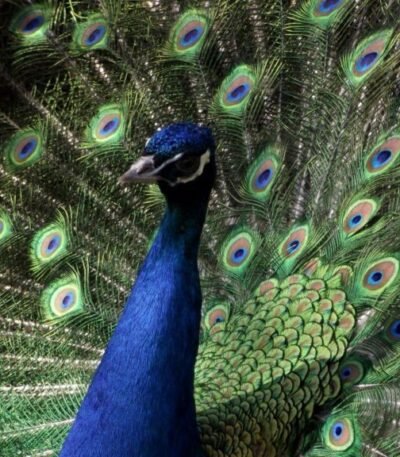
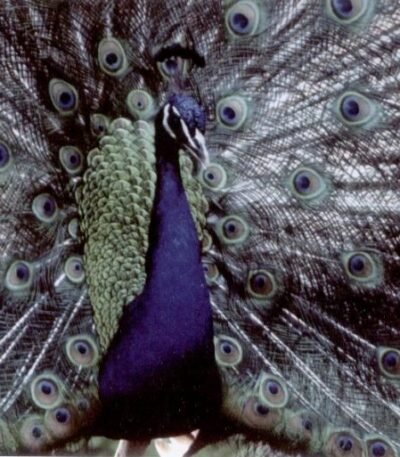
Assorted Peafowl Chicks
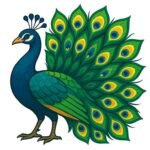
$81.00Peafowl are known around the world for their beauty. The male’s long train, colorful body, and dramatic courtship display make peafowl one of the most recognizable ornamental birds.
The peacock is also the national bird of India. India Blue Peafowl are especially well known, but other color and pattern varieties can add even more interest to a farm, estate, homestead, or ornamental bird collection.
Cackle’s Peafowl for Sale category lists assorted peafowl chicks and notes that Cackle has been a leading peafowl egg hatchery since 1936, with chicks available from June through August.
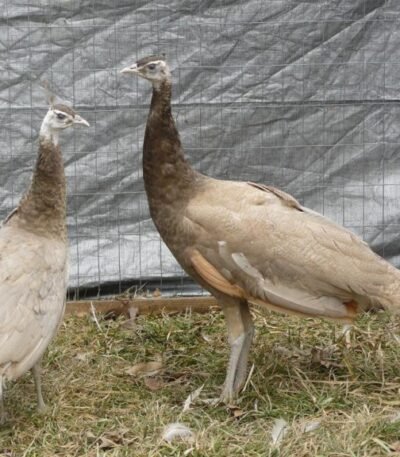
Cameo Peafowl Pair
$900.00Cameo is the fourth color mutation of the India Blue peafowl (Pavo cristatus), appearing in the United States around 1967. This Cameo peafowl pair is similar to a Buford bronze pair, only paler. The cameo color is a sex linked recessive trait.
This pair includes one mature male, or peacock, and one mature female, or peahen. The cameo mutation results in shades of brown, tan, and white. As mating season progresses, the feathers lose color and become significantly paler.
After each molt, the male is a creamy brown with dark chocolate neck feathers. Unlike other varieties, the plumage lacks iridescence. The female is a much lighter brown, with darker rusty metallic neck feathers. The peachicks are creamy tan.
Only the peacock has a train, or extra long tail coverts, which he displays while courting. The eyes, or ocelli, of a Cameo train are dark brown, fading over time until the next molt.
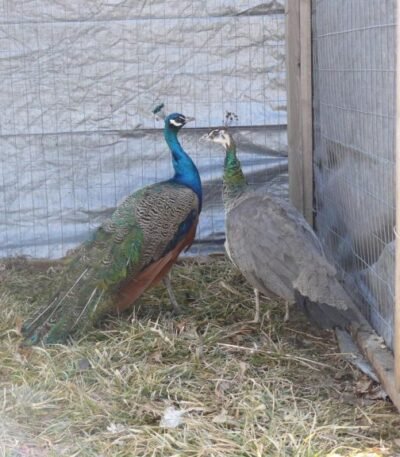
India Blue Peafowl Pair
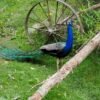
$930.00Of all the various types of peafowl, India Blue (Pavo cristatus) is the original and by far the most popular variety. This India Blue peafowl pair consists of one mature male, or peacock, and one mature female, or peahen.
India Blue is referred to as the wild type, native to India and Sri Lanka. The flashy peacock has a barred wing pattern and a bright metallic blue head, neck, and breast. The peahen is brown, which helps her hide from predators while setting, and has a metallic green neck.
Peachicks are brown and buff. They are difficult to identify by gender. But, by about 6 months of age, the male chicks will develop blue feathers, while the females start showing green.
Only the peacock has a train, which consists of long tail coverts displayed during courting. The eyes, or ocelli, of an India Blue train are dark blue. The multicolored train is iridescent, with different colors appearing in different light.
White Peafowl Pair
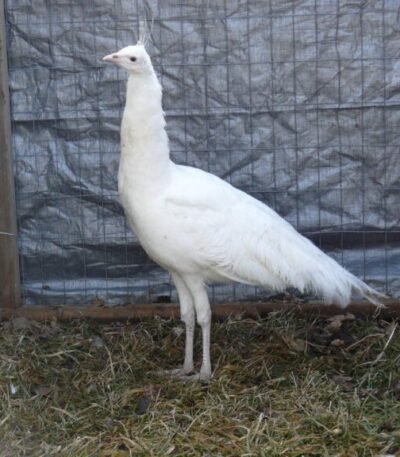
Original price was: $1,050.00.$950.00Current price is: $950.00.A White peafowl pair is the result of a genetic mutation of India Blue peafowl (Pavo cristatus). The mutation is called leucism and results in the loss of color in the plumage. All-white peafowl are the rarest of all varieties.
A peafowl pair consists of a mature male, or peacock, and a mature female, or peahen. An interesting aspect of leucistic peacocks is that they don’t hatch white. The peachicks, instead, start out with pale yellow down, eventually turning iridescent white as they mature.
Although albino peafowl exists, they are even rarer than the leucistic variety. Both are the result of a recessive gene, but while albinism is a complete loss of pigment, leucism results in only a partial loss of pigment.
Unlike albinism, leucism affects only feather color, but not the color of the eyes or skin. A White peafowl pair has natural eye color, usually blue, and naturally pigmented skin. By contrast, an albino has pink eyes and pink skin.


