











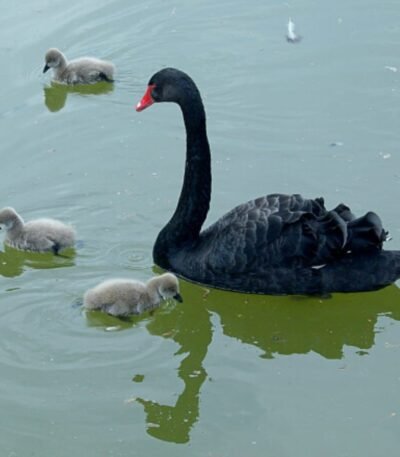
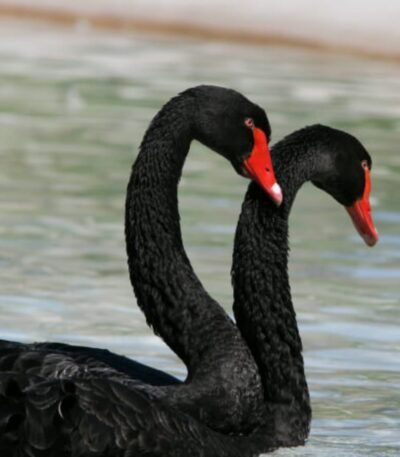
Australian Black Swan Breeder Pair
$3,400.00As the name suggests, Australian Black Swans are graceful creatures totally covered in black feathers, with an exception of small amounts of white located under their wings, visible only when the bird is in flight. Black Swans are native to Australia and have been introduced to other areas of the world, such as New Zealand and Sweden with success. Black Swans are very social and will occupy a single pond, lake, or stretch of stream upwards of 40 years and are often happy to share. Australian Black Swans prefer warmer climates due to their native Australian heritage and are nonmigratory.
Australian Black Swans mature around 18-36 months of age and typically breed during the months of February through September. Females will lay from 4 to 6 greenish-white eggs in a clutch and they will hatch in 35 to 40 days. Black swans will pair for life in either male/female or male/male pairs and tend to their young together year after year.
- Cygnets enjoy a diet of water insects and crustaceans, while adults eat only plant matter, such as algae, sea grass, and other aquatic plants. Their diet can also be supplemented with waterfowl feed, greens, and veggies.
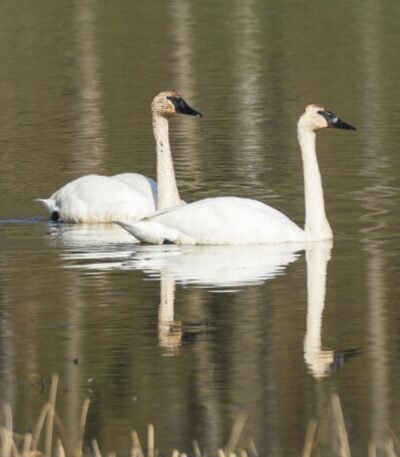
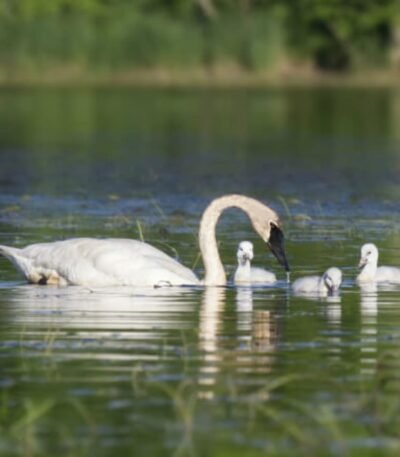
Trumpeter Swan Breeder Pair
$4,700.00Trumpeter Swans are the biggest waterfowl native to North America. Mature males stand around 4 feet tall! Because of their size, Trumpeter Swans need at least 300 feet of running space to take off in flight.
Trumpeter Swans prefer the cold of northern regions, but can be kept comfortably anywhere in the United States. You will need a body of water for them, and they prefer lakes, ponds, and large, slow-moving rivers with lots of vegetation.
Trumpeter Swans enjoy aquatic plants and grasses that can be found in and around water. This can be supplemented with a commercial waterfowl feed as well as green leafy produce.
Trumpeter Swans breeding season lasts from March thru October. Trumpeters will typically bond with their mate when they are 3-4 years of age. Trumpeters typically mate for life but do occasionally seek a new mate. Pens will lay a clutch of 4-6 cream to off-white eggs and they will hatch in 32-37 days. They will nest close to shore and reuse their nest year after year.
Adult Trumpeter Swans are a beautiful solid white with black bill and legs. Yearlings are gray-brown and will turn solid white at around 2 years of age. As the name implies, their call is loud and sounds like a trumpet. Mature Trumpeter Swan cobs (males) weigh around 26 pounds, pens (females) around 22 pounds. They range from 54 to 62 inches in length and have an impressive wingspan of 80 inches. Trumpeters live 12-15 years in the wild and 20-30 in captivity.
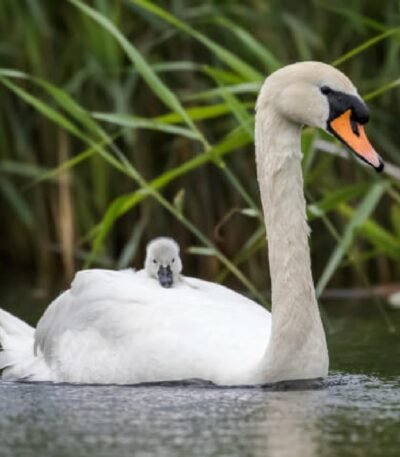
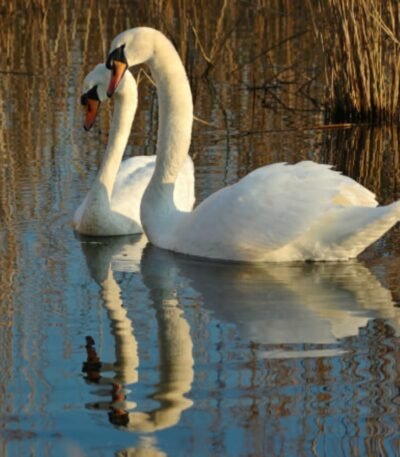
White Mute Swan Yearling Pair
$2,900.00The White Mute Swan is the most widely kept swan species by feathered fanciers. This graceful creature was introduced into the United States from Eurasia sometime in the mid-nineteenth century. Although much quieter than its relatives, the mute swan is not truly mute. They make grunting, hoarse whistling and snorting noise to communicate with their cygnets (baby swans) and will hiss at encroaching predators. Swans, in general, have maintained their “wild” personality, but can be groomed into a unique pet.
Males tend to be aggressive when his nesting mate is setting, but are passive outside of breeding season. As with all swans, White Mute Swans mate for life. If one mate is widowed, the other will seek out a new mate. Breeding season lasts from March/April until June. Mute Swans are ground nesters, and will lay a clutch of 2-5 pale blue-greens eggs that will hatch in about 34-41 days.
Another wild trait still seen in swans is their inherent desire to wander off on their own accord. All of Meyer Hatchery swans are pinioned so they are unable to fly, but White Mute Swans can travel distances by foot. To keep your swans on your property, make sure they have plenty of natural food in and around your water source and supplement with waterfowl feed if needed. Swans will eat aquatic vegetation as well as grains, seeds, and other greens like grasses or produce. A fence at least 3 foot high may be necessary. Swans require access to water in a lake, pond, coast or slow moving river at all times.
Males, or Cobs, weigh around 26 pounds and females, or Pens, weigh around 20 pounds. Mute Swans measure around 50 to 60 inches in length and have a wingspan of 82 to 94 inches. They are one of the largest of all the waterfowl. Adult White Mute Swans are solid white, while yearlings tend to have brown or gray feathers.
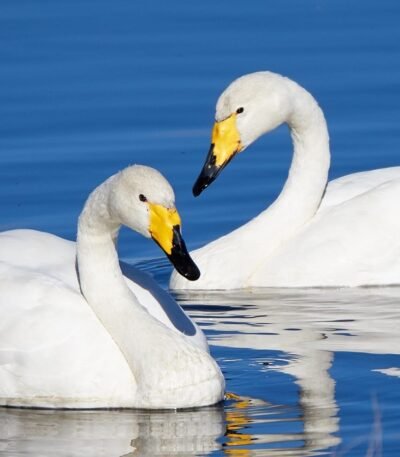
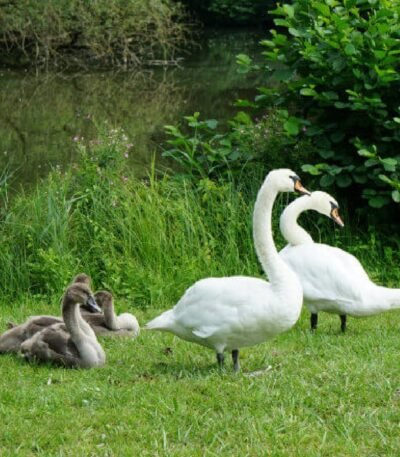
Whooper Swan Breeder Pair
Original price was: $4,600.00.$4,500.00Current price is: $4,500.00.The Whooper Swan “Cygnus Cygnus” is known for their large white body with a long thin neck, which is typically held upright. They have black legs, with a black bill. Their bill has a triangular yellow patch on it, which is unique to each Whooper Swan. The Juveniles are brown and gray with more of a pink and yellow beak. As they reach full maturity they will develop the Whooper Swan look.
Known to be the heaviest flying birds in the world, the Whooper Swans weigh 25-30 lbs and have a wingspan of 80-102 inches wide. Whooper Swans enjoy a variety of habitats including swamps, fields, farmland, and other coastal areas. You want to be sure they have plenty of open water. Whooper Swans will spend most of their time on the water, eating the vegetation in the shallow areas. In captivity, swans can also be fed a waterfowl feed as well as supplemental greens and veggies.
For breeding, Whooper Swans require a sheltered, more secluded nesting area. The breeding season for Whooper Swans begins in mid-May. They will have a clutch of 5-10 eggs and incubation takes approximately 31 days. Whooper Swans mate for life with 1 partner. The cygnets will stay with their parents through their first winter. The male Whooper Swan will guard the female and eggs and actually help to raise the cygnets when they hatch.
This talkative, gorgeous breed will make a great addition to any pond or lake. If you are looking for a swan that is truly unique than the Whooper Swan is for you.
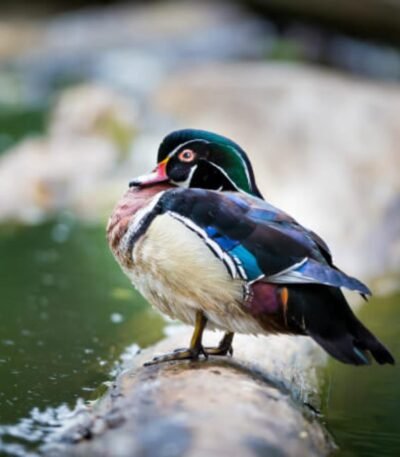
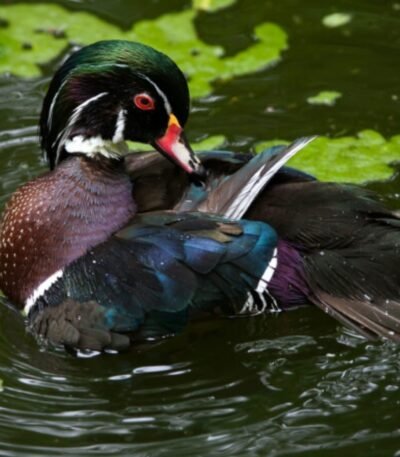
Wood Duck Yearling Pair
$450.00Wood Ducks primarily eat plant material such as seeds, grasses, and fruits, as well as insects and other arthropods like beetles or snails. Waterfowl feed can be provided as a supplement in captivity.
Wood Ducks are cavity nesters, and will nest in holes in trees; in captivity, they will easily adapt to nest boxes. Mating season begins in January where unmated pairs will pair up, and breeding begins in the spring. The Wood Duck is unique in that they are the only duck in North America that regularly produces two broods in one season. A clutch will have 6-16 creamy white to tan colored eggs and will hatch in 28-30 days.
Wood Duck drakes (males) are a beautiful array of colors. Males also have red eyes and bright red bills. Females are mostly gray and browns with blue, black, and white on their wings. They have dark eyes and a light orange bill. Both have orange legs. Wood ducks weigh around 16 to 30 ounces and have a wingspan of around 27 inches. Wood Ducks typically live around 4 years in the wild. In captivity, they live until their teens, and in fact, the oldest recorded was 22 years old.


